A faux olive tree is one of the simplest ways to bring softness, height, and a more finished feeling into a living room. In modern interiors, it works especially well because the silhouette feels architectural without being too heavy, and the muted green tone pairs naturally with warm neutrals, wood, stone, and linen.
For spaces that need a refined focal point without adding visual clutter, a well-shaped faux olive tree can help create balance while keeping the room calm and elevated.
Why Faux Olive Trees Work So Well in Living Rooms
Olive trees have a light, airy structure that suits both contemporary and transitional interiors. Unlike denser foliage styles, the branches create movement and texture without overwhelming the room. This makes them a strong option for living rooms where the goal is to add life and height while preserving openness.
They are especially effective in spaces with neutral palettes, natural wood finishes, stone or plaster textures, soft layered lighting, and clean-lined furniture.
A faux olive tree also offers year-round consistency. The look stays polished without seasonal maintenance, which is one reason it remains a popular choice in design-led homes and refined residential interiors.
Best Placement Ideas
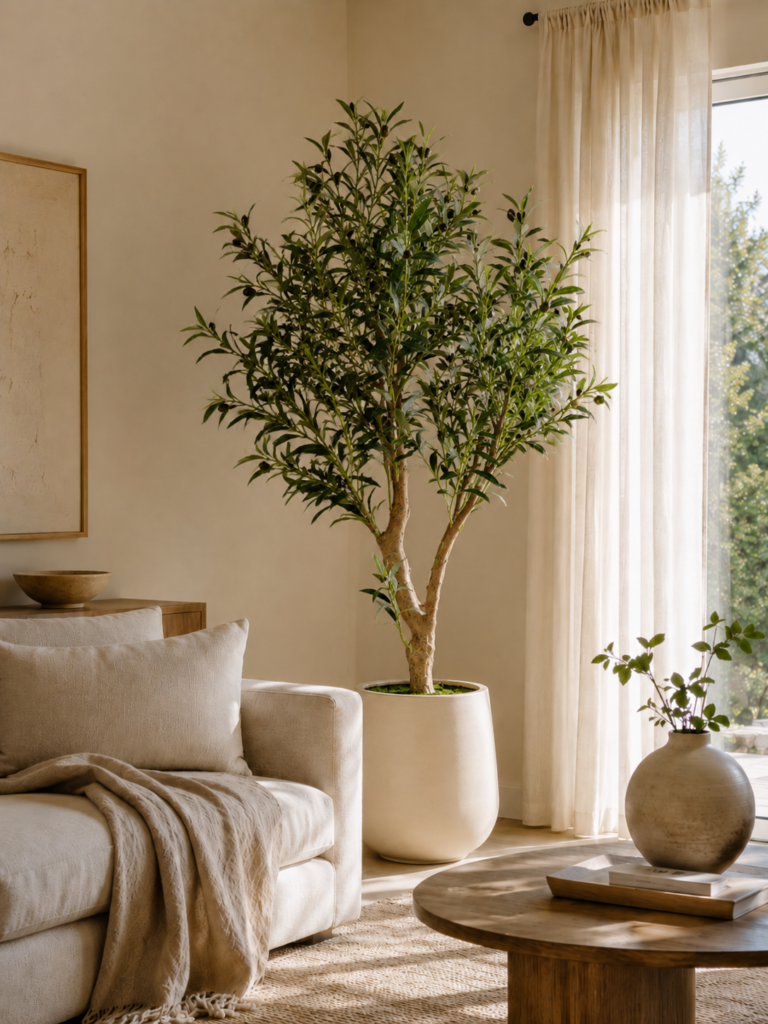
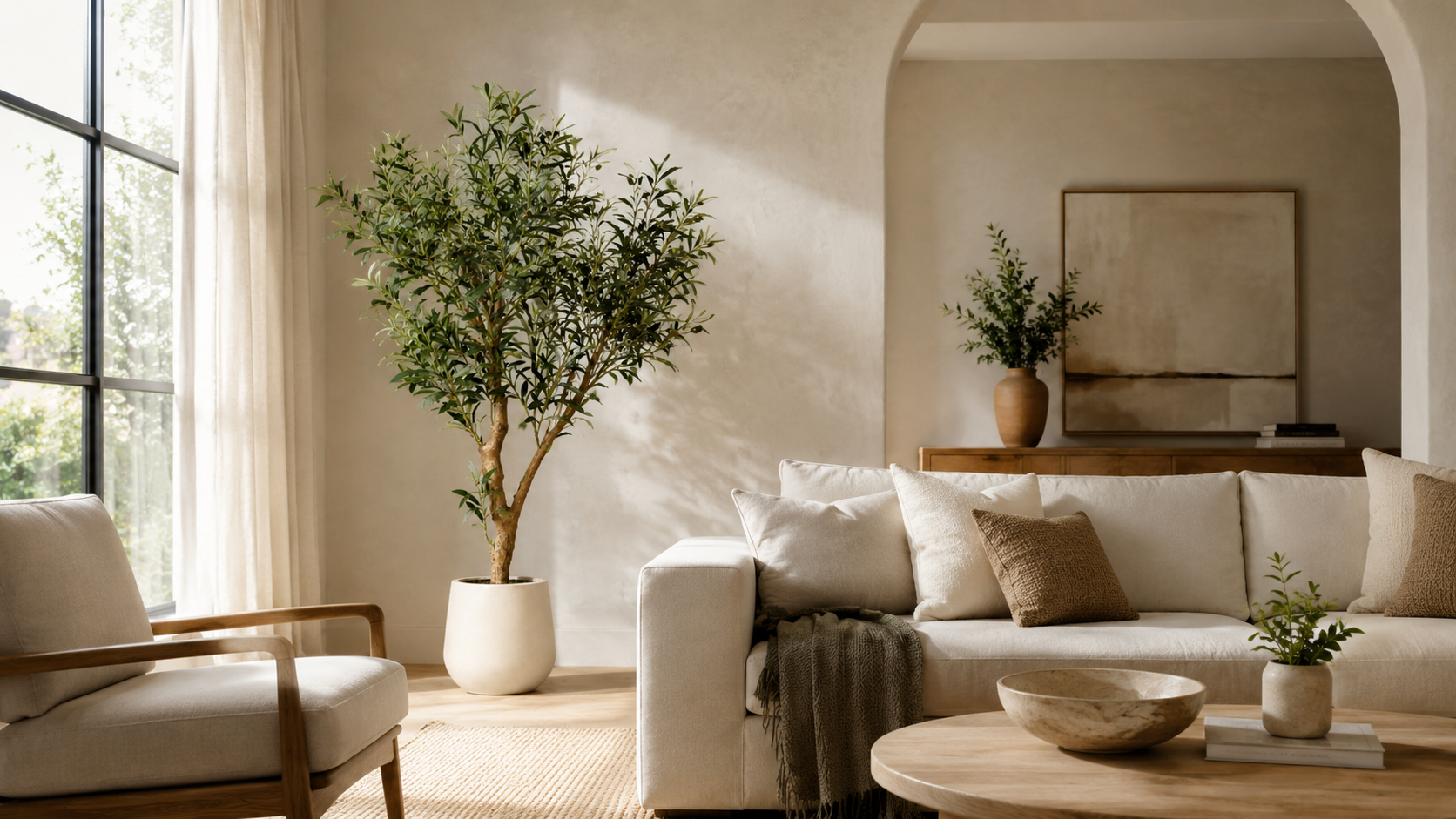
One of the most effective placements is beside a sofa, especially near the end of a sectional or next to an accent chair. This helps anchor the seating zone and makes the room feel more complete.
Another strong option is placing the tree near a console, media unit, or large window. In these positions, the tree adds vertical shape and softens architectural edges without blocking the layout.
If the room already has a strong centerpiece, such as a fireplace or statement coffee table, the faux olive tree should play a supporting role rather than compete for attention.
How to Choose the Right Planter
The planter has a major impact on how premium the final look feels. For modern living rooms, the most versatile finishes are matte stone tones, off-white textured planters, warm beige cement finishes, and soft charcoal or aged clay looks.
The goal is to keep the planter grounded and understated so the foliage remains the visual focus. A good rule is to choose a planter that feels slightly architectural but still quiet in tone.
Styling Tips for a More Natural Look
To create a more believable result, shape the branches with variation rather than making the tree perfectly symmetrical. Slight irregularity helps the silhouette feel more organic.
It also helps to leave breathing room around the tree. When a faux tree is crowded by side tables, lamps, or too many decorative objects, it can lose the calm, editorial quality that makes it effective in the first place.
For a more finished presentation, use a planter with material depth, keep nearby décor minimal, repeat natural textures elsewhere in the room, and place the tree where it catches soft daylight when possible.
Final Thoughts
For modern living rooms, faux olive trees remain one of the most versatile styling elements. They are timeless, easy to pair with elevated interiors, and capable of making a space feel warmer, softer, and more complete.
When chosen in the right scale and paired with the right planter, they bring a finished designer look that feels both relaxed and intentional.